Aging In Place Kitchen Design ideas
Aging in place is important to think about when it comes to remodeling your kitchen. It’s more than just a trend; it’s a smart, forward-thinking approach to home renovation. Designing your kitchen with aging in mind doesn’t mean sacrificing style for function. It’s about finding a balance that ensures your kitchen is beautiful, functional and will accommodate your needs in the future as they evolve.
If you’re planning a kitchen remodel and want a space that will serve you well now and, in the future, here are a few design ideas that will prioritize accessibility, convenience, and of course, style!
1. Task-Specific Zones
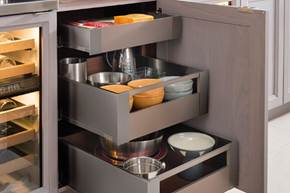
Designing a kitchen with clearly defined task zones is one of the most effective ways to support aging in place. By creating dedicated areas for food prep, cooking, cleaning, and storage, the kitchen becomes easier to navigate and less physically demanding to use. This layout minimizes unnecessary steps, bending, and reaching, reducing fatigue and the risk of accidents.
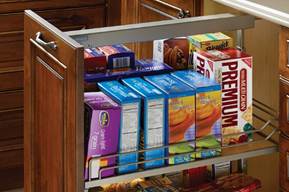
Frequently used items such as cookware, utensils, and everyday dishes should be stored at waist or counter height for easy access. Less frequently used appliances or specialty items can be placed in higher or lower storage areas. Pull-out shelves, drawer organizers, and appliance garages further enhance accessibility, ensuring everything has a purposeful place. A well-zoned kitchen not only improves efficiency but also supports independence and confidence over time.
2. Contrast & Color
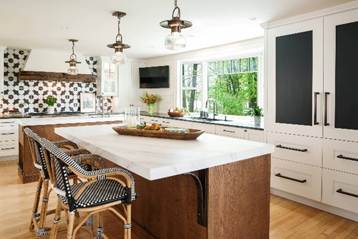
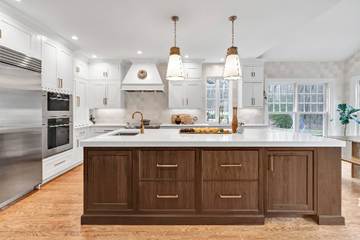
Thoughtful use of contrast and color plays a critical role in aging-friendly kitchen design. As vision changes with age, distinguishing between surfaces becomes increasingly important. Utilizing contrasting colors between countertops, cabinetry, backsplashes, and flooring helps improve depth perception and spatial awareness.
For example, pairing light countertops with darker cabinets (or vice versa) makes edges easier to identify, while contrast between the floor and cabinetry helps prevent missteps. Matte finishes can reduce glare, and warm, neutral color palettes create a calming environment without sacrificing visibility. Beyond safety, intentional color choices enhance the overall aesthetic, proving that functional design can still be beautiful, modern, and inviting.
3. Smart Technology
Incorporating smart kitchen technology adds an extra layer of convenience and accessibility for aging in place. Features like motion-sensing or touchless faucets reduce the need for grip strength, while voice-activated appliances allow users to operate devices hands-free—ideal for those with limited mobility or arthritis.
Smart ovens, lighting, and thermostats can be controlled through voice commands or mobile apps, making everyday tasks easier and safer. Automated lighting improves visibility during early mornings or evenings, and smart alerts can help prevent common kitchen mishaps, such as leaving appliances on. When thoughtfully integrated, smart technology supports independence, simplifies daily routines, and future-proofs the kitchen for evolving needs.
4. Ideal Cabinets for Aging in Place
As we age, everyday kitchen tasks like bending down to retrieve pots or reaching overhead for heavy dishware can become increasingly difficult and uncomfortable. Thoughtfully designed cabinetry plays a major role in maintaining independence while reducing physical strain.
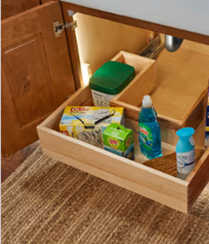
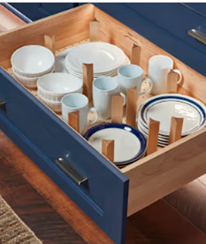
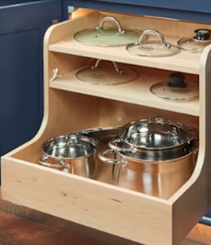
When designing your kitchen, base cabinets with pull-out shelves are an excellent aging-in-place solution. These cabinets allow the contents to glide outward toward you, eliminating the need to kneel, crouch, or reach into dark, hard to access spaces. Instead of digging through the back of a cabinet, everything is visible, organized, and within easy reach.
There are many pull-out storage options available, each designed to improve accessibility and organization, including:
- Pull-outs for pots and pans, keeping heavy cookware easy to reach
- Specialized inserts for Tupperware and food container storage, reducing clutter
- Pull-out organizers for dishware and everyday plates
- Dedicated drawers for cutlery and wrap storage
- Pull-out pantry systems for dry goods
- Slim pull-outs for spices and oils, keeping frequently used items at hand
Additional cabinet features that further support aging in place include:
- Full-extension drawers, allowing access to items stored all the way in the back
- Soft-close drawers and doors, protecting hands and fingers from accidental pinches
- Pull-down shelving systems in upper cabinets, bringing items down to counter height
- Magic corner or corner pull-out systems, maximizing deep or corner cabinets without wasted space
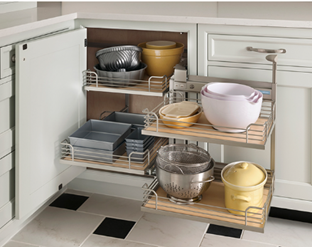
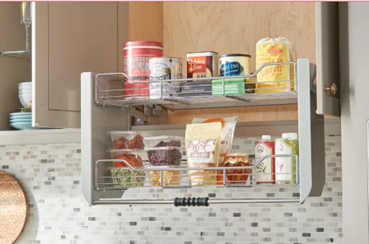
Together, these cabinet solutions make kitchen storage safer, easier to use, and more intuitive, helping your kitchen adapt gracefully to your needs while remaining stylish and highly functional.
5. Updated Kitchen Layout
If you’re planning a kitchen remodel, one of the most impactful decisions you can make is investing in a well thought out layout. A smart layout dramatically improves accessibility, comfort, and ease of movement, key elements for aging in place successfully. The guiding principle? Allow for more space.
Wider walkways are one of the most effective upgrades. Increasing clearance from the standard 36 inches to 42–48 inches make it much easier to move around the kitchen, especially if mobility aids such as walkers or wheelchairs are ever needed. Even without them, wider pathways reduce congestion, improve safety, and create a more open, airy feel.
An open-concept layout is another excellent consideration. Open kitchens promote better flow between cooking, dining, and living areas, reducing obstacles and unnecessary turns. They also provide greater flexibility for entertaining, because planning ahead doesn’t mean giving up holiday gatherings, family dinners, or hosting friends. An open layout ensures your kitchen remains not only accessible, but also welcoming and social at every stage of life.
6. Update Your Lighting
If you have ever found yourself squinting under dim kitchen lights while chopping vegetables, you know the value of good lighting. As we age, this becomes even more important. Poor lighting can lead to accidents like cutting yourself while preparing meals or tripping over unseen objects.
A great way to create a well lit and safe kitchen is with layered lighting. Layered lighting refers to the use of multiple types of lighting to create a space that can adapt to your needs. Start with bright overhead lighting that provides general illumination for the entire space. Recessed lights and large pendant fixtures are great for this. Next, install undercabinet lighting to brighten up your countertops. This task lighting will help you see clearly when prepping meals and cleaning up. For even more convenience, add motion activated lighting in cabinets and drawers.
Natural light is also very helpful. Windows can help flood your kitchen with beautiful mood boosting daylight. Not only will this make your kitchen more welcoming, it will also cut down on your energy bills.
7. Appliances
Choosing the right appliances is just as important as layout and cabinetry when designing an aging in place or ADA-compliant kitchen.
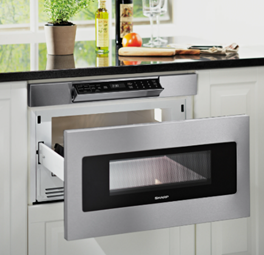
*Select a Built-In Microwave
Microwaves are typically placed above the stovetop or on the countertop as a separate appliance. For better accessibility, build the microwave into the lower cabinets during your kitchen renovation. With a pull-out opening that loads from the top, using the microwave will be much easier. This microwave is well within ADA compliance for reach and operating guidelines.
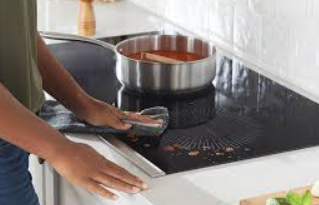
* Install an Induction Cooktop / Stove
Compared to a conventional gas or electric stove that is hot to the touch, induction only heats certain types of metal. This is a tremendous safety accessory for anyone. If your skin accidentally touches the stovetop while it’s on, it will not burn you.
*Opt for an Auto Shut-Off Stove/Oven
To further enhance your safety, consider getting a stove/oven that will automatically shut off after it’s been left on for a certain amount of time.
This will reduce your overall energy consumption as well as make your kitchen safer.
*French Door & Side-Swing Appliances for Aging in Place
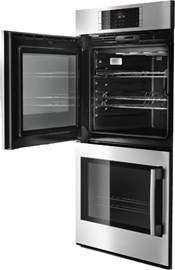
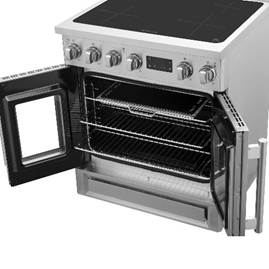
French door and side-swing ovens are especially effective, particularly in wall oven applications because they eliminate the need to lift heavy pans over a hot, drop-down door. Instead, the door opens from the side, allowing users to get closer to the oven and maneuver dishes in and out with greater ease and safety. This is a significant advantage for wheelchair users or anyone with limited strength or mobility.
Side-swing ovens, available in both single-door and French door styles, offer the same accessibility benefits while providing flexibility in design. A single side-hinged door (left or right swing) is ideal for under-counter or wall installations, and even freestanding ranges with side-swing doors make loading and unloading cookware easier from a seated position.
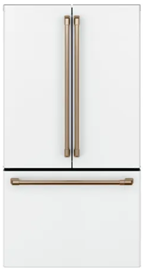
French door refrigerators also support aging in place by keeping frequently used items at an accessible height. The side-by-side upper doors allow easier reach from a seated position, while the bottom freezer reduces the need to bend or stretch for everyday items. While some homeowners worry about items getting lost in deep freezer drawers, proper organization solutions can easily resolve this.
These appliance configurations work so well for ADA-friendly kitchens because they reduce lifting, improve reach, and create clearer maneuvering space. By minimizing physical barriers and awkward movements, French door and side-swing appliances help create a kitchen that is safer, more comfortable, and more inclusive for users at every stage of life.
Keeping aging in place kitchen design in mind during a remodel isn’t just about planning for the future, it’s about creating a space that supports comfort, safety, and independence at every stage of life. When it comes to kitchen design, the details truly make all the difference.
A well-designed kitchen should be both stunning and functional, blending thoughtful features with timeless style. By looking beyond the basics and incorporating smart layout choices, accessible cabinetry, contrasting finishes, and user-friendly appliances, you can create a kitchen that adapts as your needs change without sacrificing beauty or enjoyment.
Thinking about starting your remodel? Let’s talk about how to make your dream kitchen both stylish and practical for aging in place. The team at Kornerstone Kitchens is here to help you design a space that works for you today and continues to support you well into the future.
Together, we can bring these innovative ideas to life, and create a kitchen designed to truly stand the test of time.